Hispaniola Monkey: The Extinct Primate Of The Dominican Republic
The only monkey ever native to Hispaniola vanished thousands of years ago. Its story survives in cave fossils, and every monkey visitors meet on the island today was brought there by people.
Short answer
The Hispaniola monkey (Antillothrix bernensis) is the only primate known to be native to the island, and it is extinct, known solely from cave fossils in the Dominican Republic. No wild monkeys live on the island today. The squirrel monkeys at Monkeyland in Punta Cana are imported, captive park animals. The monkeys at Monkey Jungle are captive park animals too.
Every monkey a traveler feeds on a Punta Cana excursion is, in the strictest sense, an immigrant. The island of Hispaniola, shared by the Dominican Republic and Haiti, once had its own primate: a small, now-extinct monkey called Antillothrix bernensis, known today only from bones pulled out of caves. This page covers what the fossil record actually shows about that animal, why no wild monkeys live on the island now, and how that history connects to the monkey parks visitors can book around Punta Cana, Puerto Plata, Sosua, Samana and La Romana. For the practical side of meeting monkeys today, the Monkeys in Dominican Republic homepage gathers the bookable options in one comparison.
What Was The Hispaniola Monkey?
The Hispaniola monkey, scientifically Antillothrix bernensis, is the only primate known to have been native to Hispaniola, and it is extinct. It is known exclusively from fossil remains, including skulls, jawbones and limb bones, recovered from caves in the present-day Dominican Republic. No living population has ever been documented by science.
It was a platyrrhine, a New World monkey, which places it in the same broad lineage as the monkeys of Central and South America. The species was first described from a jaw found in Cueva de Berna, a cave near the southeastern coast of the Dominican Republic, and that cave gave the animal its species name. Later finds at other sites, including La Jeringa, Cueva Macho and Padre Nuestro, added skulls and postcranial bones that let researchers reconstruct its body.
The picture those bones give is of a medium-small monkey built for climbing. Researchers who have studied the fossils describe limb proportions consistent with an animal that moved through trees, the kind of quadrupedal climber you would expect in a tropical forest canopy. If you want the primary scientific detail, the fossil record is summarized on the species page at Wikipedia's Hispaniola monkey article, and the 2010 research paper at PMC, the open-access life-sciences archive, covers the cave finds in depth.
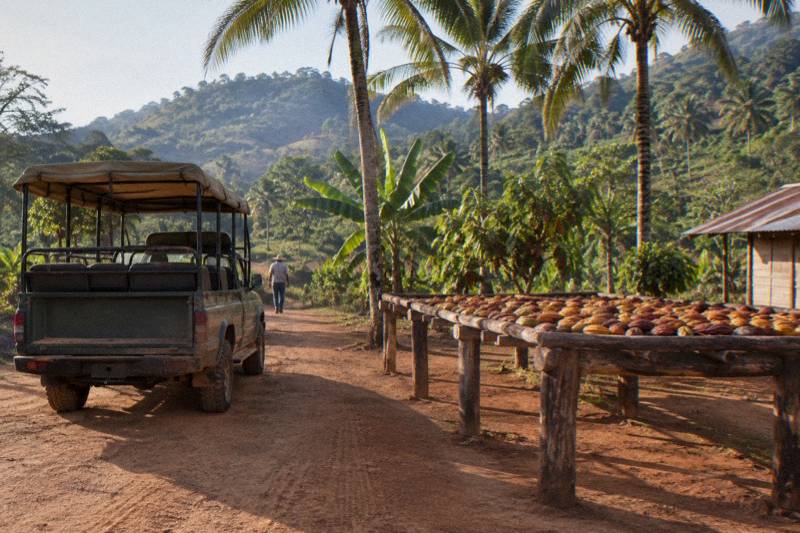
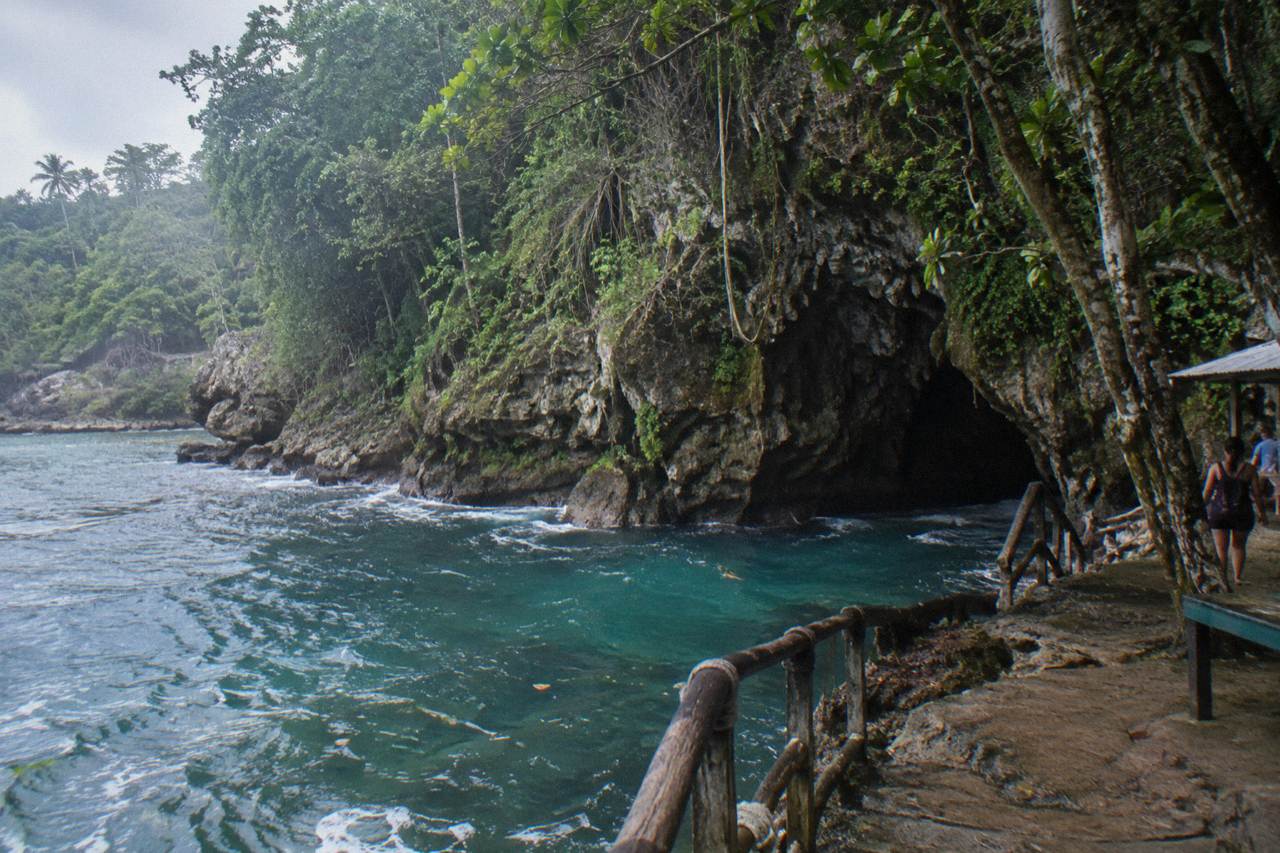
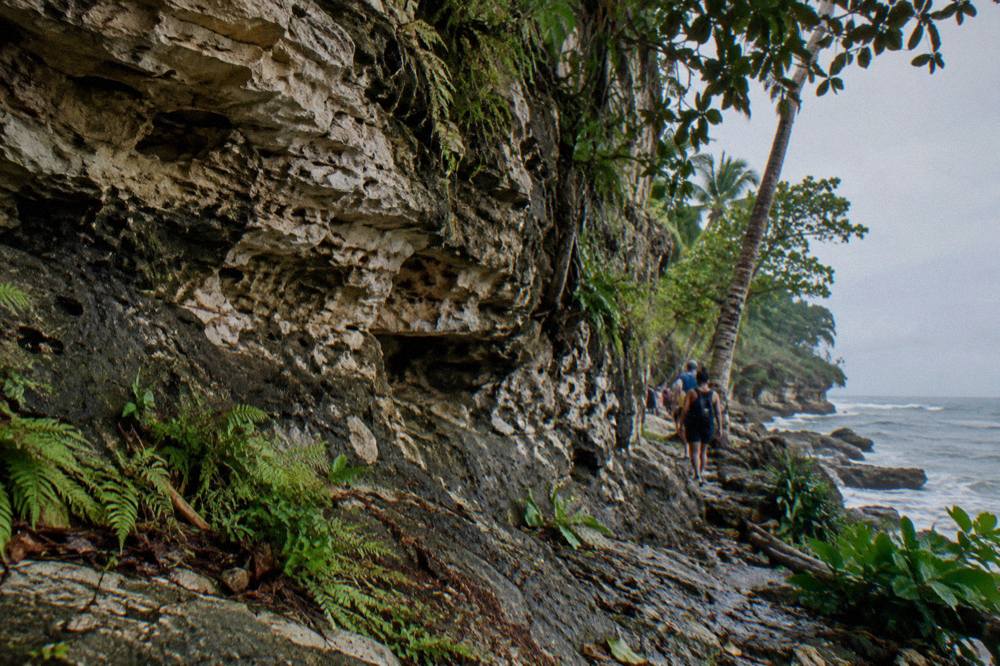
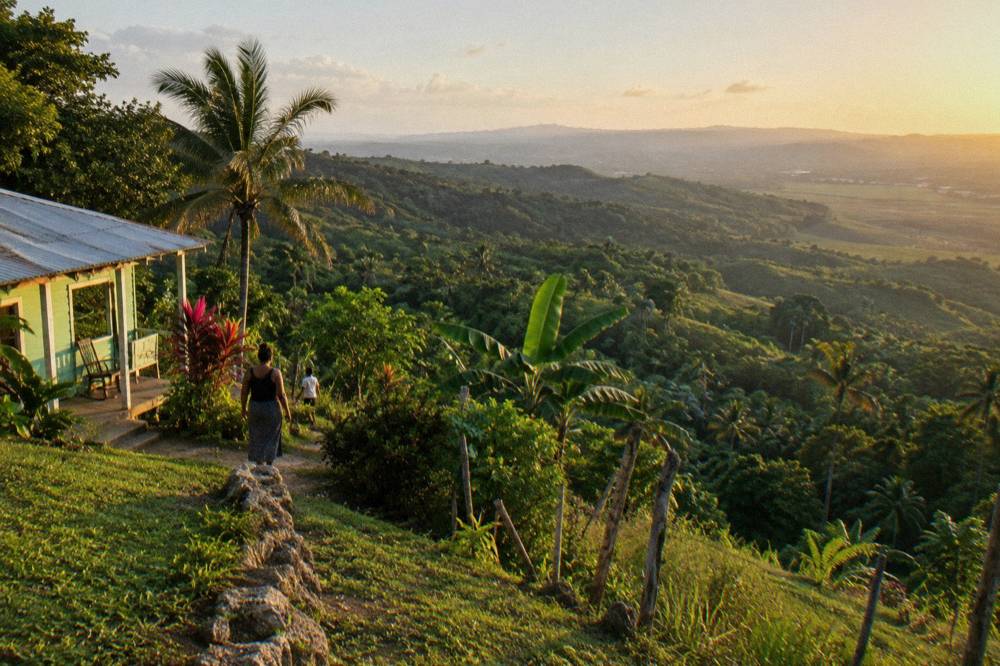
One point matters for visitors: nobody has ever photographed a living Hispaniola monkey. Every image on this page is of the landscapes where its fossils were found, or of the parks where its distant relatives now live.
| Fossil site | Region of the Dominican Republic | What was found |
|---|---|---|
| Cueva de Berna | Southeastern coast | The original jaw that named the species |
| La Jeringa | Eastern Dominican Republic | Skull and limb material |
| Cueva Macho | Eastern Dominican Republic | Cranial and postcranial fossils |
| Padre Nuestro | Near the southeastern coast | Additional fossil remains |
When Did The Hispaniola Monkey Go Extinct In The Dominican Republic?
The Hispaniola monkey became extinct during the Holocene, the geological epoch that continues to the present day. The oldest fossils date to about 1.32 million years ago in the Early Pleistocene, and a radiocarbon-dated specimen falls around 3,850 years before present. Humans arrived on the island well within that window.
Those two numbers frame the whole story. The species survived, per the fossil record, for well over a million years on Hispaniola, and its youngest dated remains come from a period when people were already present in the Caribbean. Researchers have not settled on a single cause of extinction: candidate pressures include hunting, habitat change as human populations grew, and broader island ecosystem shifts after colonization.
The dating comes from the paleontological literature rather than from any Dominican government statement, and it is worth keeping the attribution straight. The 2015 paper at ScienceDirect on Antillothrix fossils and dating is the kind of primary source behind the figures. What the record supports plainly is this: by the time European chronicles begin, the monkey was already gone, and no account from the colonial era describes a living native monkey on the island.
For a visitor planning a trip, the practical takeaway is simpler. Any expectation of glimpsing a wild monkey from a resort beach, a safari truck or a hiking trail in Samana is misplaced, and no tour on this island should be sold or bought on that hope. What tours sell is a park visit, and the parks deliver habituated, captive animals. The section on where monkeys live in the Dominican Republic today covers that side of the island in detail.
Because most readers arrive at this history while shopping for a monkey excursion, here are the three Punta Cana listings this site compares most often: the classic plantation safari, the half-day version, and a longer natural-jungle option.
Are There Any Wild Monkeys Left In The Dominican Republic?
No. The Dominican Republic has no native wild monkeys today, and no source in the scientific or official record describes a surviving wild or feral monkey population anywhere on Hispaniola. Every monkey a visitor can meet in the country lives in a captive park environment, and the squirrel monkeys at Monkeyland were brought there as an attraction. If you still hope to spot monkeys roaming free in the region, the guide to the Caribbean islands where wild monkeys still live points to the right destinations.
This is the fact most worth stating plainly, because marketing copy blurs it constantly. Tour listings lean on scenic wording, but the animal in front of you at Monkeyland in the Anamuya hills outside Punta Cana is a squirrel monkey kept in an enclosed five-acre park where the monkeys come to visitors. The Dominican Republic's own tourism portal covers the same park at godominicanrepublic.com's Monkeyland entry. The listing language is not a claim about native wildlife, and this site treats it as one only with that caveat attached.
The distinction matters for what you book. A Monkeyland tour is a scheduled visit to an enclosed park with habituated animals, which is exactly why operators can describe monkeys taking fruit from visitors' hands. Wild animals do not do that on schedule. Captive park animals, fed by guides daily, do. Our general introduction to Monkeyland in the Dominican Republic unpacks what that means in practice.
It also matters for what you should not book. No excursion can honestly promise a wild primate sighting in the Dominican Republic, on any coast, in any season. If a seller implies otherwise, that is a signal to check the listing's actual inclusions.
Where Can You See Monkeys In Punta Cana Today?
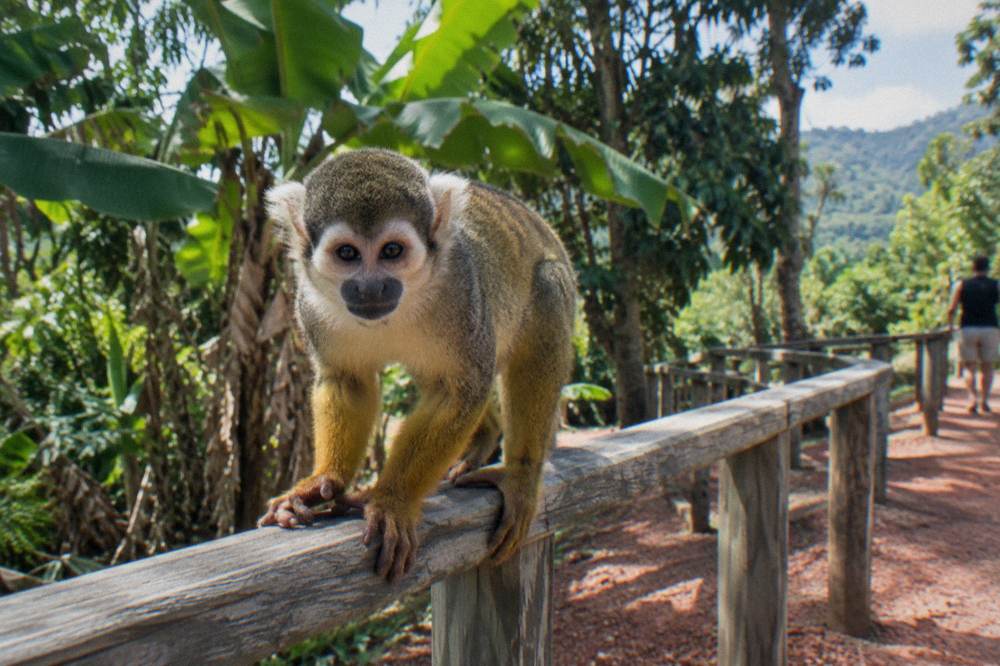
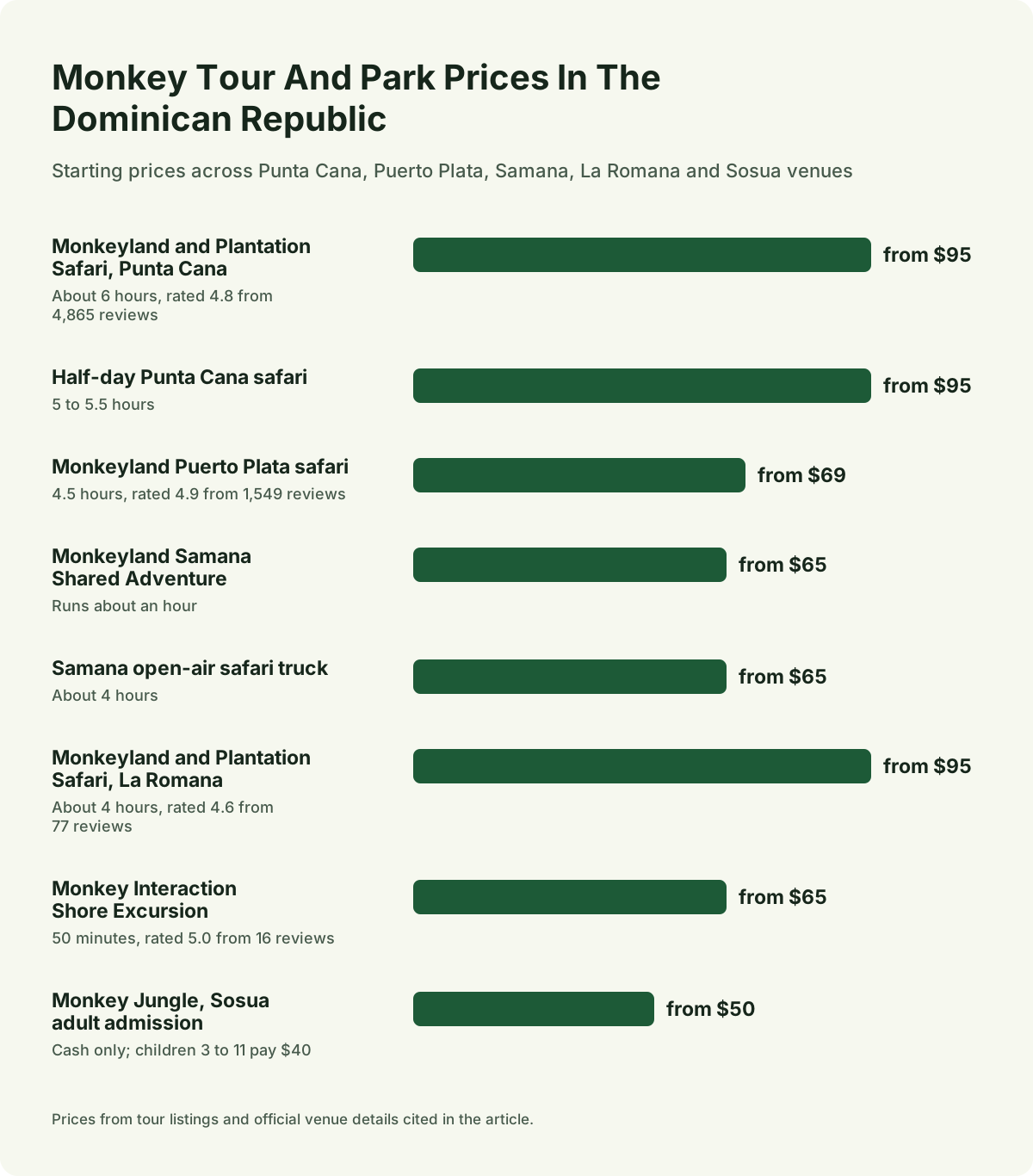
In Punta Cana, the bookable monkey experiences center on Monkeyland, a five-acre park in the Anamuya hills, reached only through tour operators. The featured Monkeyland and Plantation Safari Tour from Punta Cana runs from $95 per person, is rated 4.8 from 4,865 reviews, lasts about 6 hours, and lists hotel pickup, drop-off and bottled water among its inclusions.
Runners Adventures dominates the Punta Cana listings, and the same park appears under several similarly named products, which is worth understanding before you pay. The full-day plantation safari, the half-day safari and the zipline combos share the same core Monkeyland visit, a guided walk among squirrel monkeys that take food straight from visitors' hands, wrapped together with different amounts of plantation, cultural and adventure content.
The featured plantation safari carries a 4.8 rating across 4,865 reviews, and its restrictions deserve a look before booking: pregnant travelers cannot take part and the tour is not wheelchair accessible. The half-day version, at 5 to 5.5 hours from $95 per person with a 4.6 rating from 1,648 reviews, trims the day for travelers with an afternoon flight or small children.
The operator's own rules for the Monkeyland visit, stated on the Runners Adventures listing, are consistent across its products: no sunscreen or insect repellent on the day of the interaction, comfortable clothes, camera and cash, and no participation for pregnant guests or people with heart conditions, epilepsy or upper respiratory infections. Our what to wear guide for Monkeyland covers the practical side of those rules.
Are There Monkeys Near Puerto Plata And Sosua?
Yes, in parks. Puerto Plata has the Monkeyland Puerto Plata safari, rated 4.9 from 1,549 reviews and priced from $69 per person, and the Sosua area has Monkey Jungle, a separately owned venue whose official site lists monkey tours and a zip line, admission from $50 for adults with cash-only payment.
The two should not be confused, and neither should be confused with Punta Cana's Monkeyland, even though the names overlap. Monkeyland Puerto Plata is a Runners Adventures product on the north coast, a 4.5-hour group safari where visitors feed squirrel monkeys fruit in a sanctuary environment. Hot chocolate and coffee samples come with the visit. Pickup is not specified, so check transport before relying on it.
Monkey Jungle near Sosua is a different operation entirely, with its own gate. Its official homepage at monkeyjungledr.com states hours of 9:00 am to 4:00 pm, closure on Sundays, no reservations required, cash only, and admission tiers of $50 for visitors 12 and up and $40 for children 3 to 11, with zip line and combination tickets higher. The same page states that profits go to HADAC, the venue's non-profit organization, which supports medical and dental clinics serving local communities. The park doesn't confirm which monkey species live there, so just expect monkeys, nothing more specific. Our Sosua guide and the direct Monkeyland versus Monkey Jungle comparison sort out which north-coast option fits which traveler.
| Venue | Location | Native species? | How it works |
|---|---|---|---|
| Monkeyland | Anamuya hills, Punta Cana area | No, imported squirrel monkeys | Tour-operator access only, five-acre park |
| Monkeyland Puerto Plata | North coast | No, squirrel monkeys | Group safari tour, from $69 per person |
| Monkey Jungle | Between Sosua and Cabarete | No, captive monkeys | Own gate and ticketing, cash only |
| Monkeyland Samana | Samana peninsula | No, squirrel monkeys | Short guided tours, from $65 per person |
Are There Monkeys In Samana And La Romana?
Yes, at Monkeyland outposts reached by tour. The Monkeyland Samana Shared Adventure runs from $65 per person for about an hour, while the Samana open-air safari truck version runs about 4 hours from the same price. From La Romana, the Monkeyland and Plantation Safari is rated 4.6 from 77 reviews, from $95 per person over about 4 hours.
The Samana tours are the shortest monkey experiences available, which suits travelers combining the peninsula's whale season or El Limon waterfall with a lighter animal stop. The shared adventure listing describes close interaction with a family of squirrel monkeys eating from a fruit bowl or hands, includes the monkeys' food, and lists its duration at about one hour, so it works as an add-on rather than a full day.
La Romana and Bayahibe, on the southeastern coast, sit within reach of the same Anamuya park that serves Punta Cana, so the products there are variations on the plantation safari: the La Romana version at 4.6 from 77 reviews, the Juan Dolio full-day version rated 4.9 from 128 reviews with a typical Dominican buffet lunch listed, and a half-day Bayahibe safari. All are Runners Adventures listings. Our La Romana and Bayahibe tours page compares them line by line.
Cruise passengers calling at Amber Cove or Taino Bay near Puerto Plata have their own short options, including a 50-minute Monkey Interaction Shore Excursion rated 5.0 from 16 reviews and priced from $65 per person, a listing small enough that the rating pool deserves its count printed beside it. The Amber Cove and Taino Bay monkey tours guide is the dedicated page for that scenario.
How Does The Hispaniola Monkey Compare To The Squirrel Monkeys In The Parks?
The Hispaniola monkey was a native island species that evolved on Hispaniola over more than a million years. The squirrel monkeys in today's parks are South American animals, imported and kept in captive park environments for visitor interaction. The two share a continent-scale lineage but no recent ancestry, and only one of them is extinct.
This comparison is where the island's monkey story turns from paleontology into a live booking decision. The animal that vanished was part of the island's original ecosystem. The animals visitors photograph today are, in the plainest terms, livestock for tourism: imported, habituated, fed on schedule, and dependent on the parks that keep them. Neither fact makes the park visit better or worse, but knowing which is which protects you from two opposite disappointments, expecting a wild sighting or expecting a native species.
| Hispaniola monkey | Park squirrel monkeys | |
|---|---|---|
| Scientific name | Antillothrix bernensis | Saimiri species |
| Status | Extinct, Holocene | Living, captive in Dominican parks |
| Origin | Native to Hispaniola | Imported to the island |
| Known from | Cave fossils only | Daily visitor interactions |
| Where visitors meet them | Nowhere | Monkeyland parks, Monkey Jungle, cruise-port sanctuaries |
| Wild population | None | None |
Whether the squirrel monkeys themselves are good company is a separate question with a real answer: they are a small, quick, habituated species whose behavior around people is shaped by daily feeding. Our piece on whether squirrel monkeys are friendly to humans covers the behavioral side without the marketing gloss.
Why Does The Extinction Matter For Visitors To The Dominican Republic?
An extinct native primate and a captive imported one are different animals with different claims on your attention, and knowing the difference changes what you book, what you expect, and what questions you ask operators about welfare. The fossil record is the island's only native monkey story. The parks are a separate, modern industry.
Start with expectations. Travelers who believe the Dominican Republic has wild monkeys sometimes buy an excursion hoping for a sighting and feel shortchanged by a fenced park. Travelers who know the parks are parks book the product that matches: a scheduled, guided, close-up encounter that no wild population anywhere could reliably provide. The parks, for their part, are upfront about what they sell once you read past the jungle adjectives. For the full picture of what actually lives on the island today, the guide to wild animals in the Dominican Republic covers every species you might realistically spot.
Then comes the welfare question. Operators describe limited daily visitor numbers, veterinary oversight and careful feeding rules at Monkeyland, and Monkey Jungle's own site points to its non-profit clinic funding. No independent exposé, regulator statement or welfare audit of the Dominican monkey parks is publicly available, so every account of conditions comes from the operators themselves. Treat those words as marketing, neither proof of good welfare nor evidence of harm. The dedicated ethics discussion of Monkeyland works through that evidence honestly.
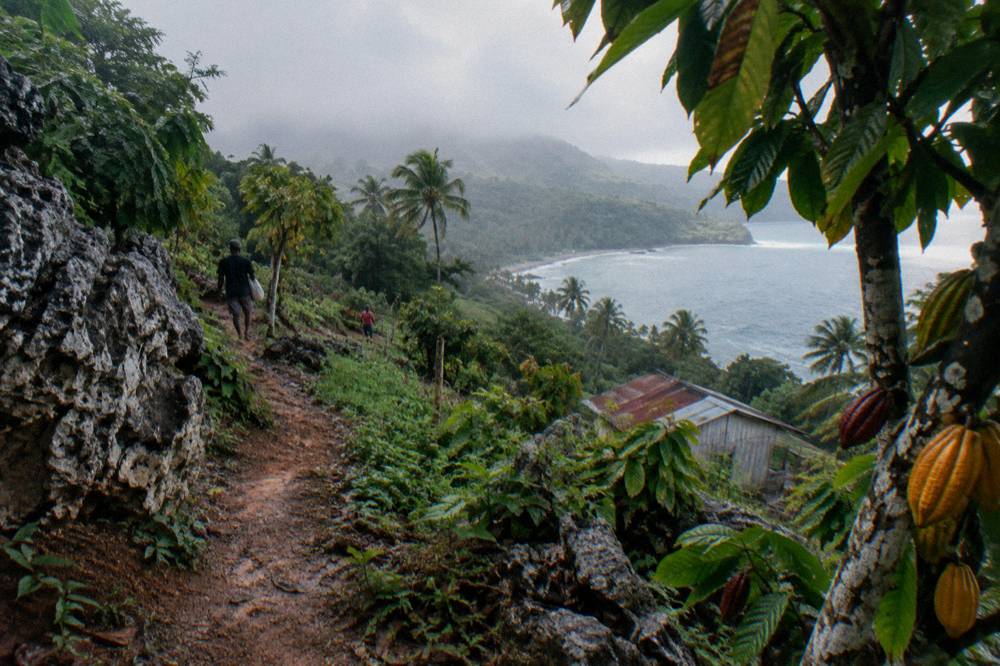
Finally, the extinction is simply a good story, and it belongs to the places you will stand. The caves that yielded Antillothrix bernensis fossils sit in the same southeastern karst landscape day-trippers pass on the way to the Anamuya hills. Whether your trip runs from Punta Cana, Puerto Plata, Sosua, Samana or La Romana, the deeper timeline is the same: an island that kept its own monkey for a million years, lost it, and now keeps others in its place.
Common Questions About The Hispaniola Monkey
Are There Wild Monkeys In The Dominican Republic?
No. The only primate native to Hispaniola, the Hispaniola monkey (Antillothrix bernensis), is extinct, and no wild or feral monkey population has been documented on the island. All monkeys visitors can meet in the Dominican Republic live in captive parks.
Are The Monkeys At Monkeyland Native To The Dominican Republic?
No. The squirrel monkeys at Monkeyland are South American animals kept in a five-acre park in the Anamuya hills near Punta Cana. They are habituated captive animals, not a native or wild population.
When Did The Hispaniola Monkey Go Extinct?
During the Holocene, the current geological epoch. The youngest radiocarbon-dated remains fall around 3,850 years before present, a period when humans were already present in the Caribbean, though researchers have not settled on a single cause.
Can I See The Hispaniola Monkey Anywhere Today?
No living animal, photo or captive population exists. The species survives only as fossils, primarily in caves of the southeastern Dominican Republic. What you can book today are visits to parks keeping imported squirrel monkeys.
Which Monkey Tours Run From Punta Cana?
The featured Monkeyland and Plantation Safari Tour from Punta Cana runs from $95 per person, rated 4.8 from 4,865 reviews, with a half-day version, zipline combos and buggy combos also listed. All reach the same five-acre park through tour operators.