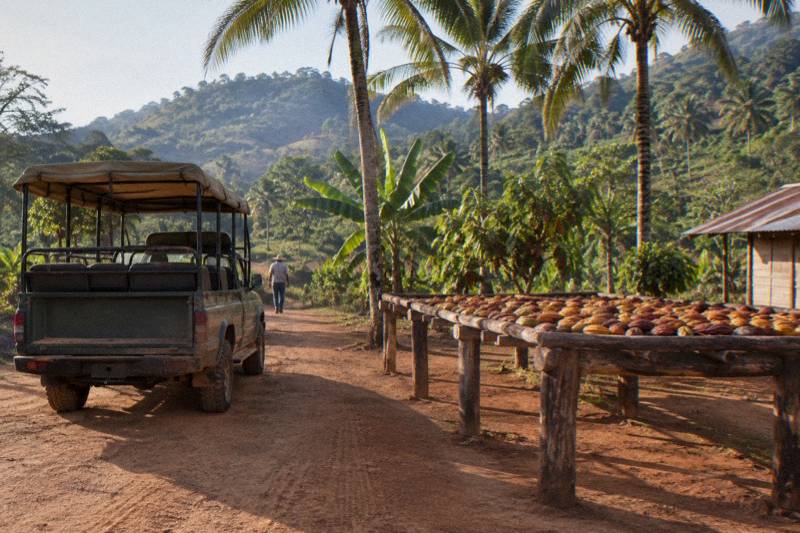
What Animal Is Punta Cana Known For?
Punta Cana is known for its squirrel monkeys at Monkeyland, plus humpback whales, iguanas and birds. Here is the full animal story and how to book a monkey tour.
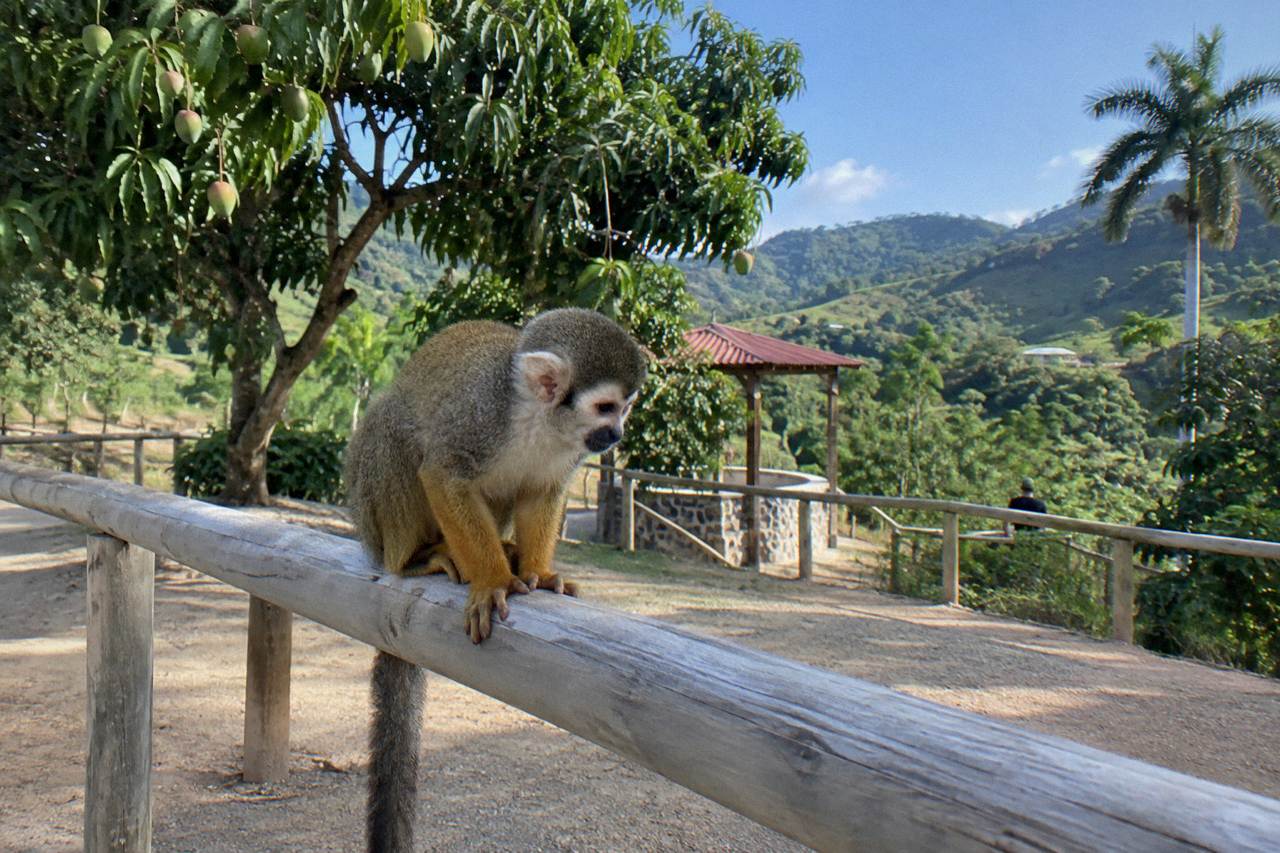
The animal Punta Cana is known for is the squirrel monkey, specifically the habituated squirrel monkeys kept at Monkeyland, a five-acre park in the Anamuya hills outside the resort strip. No monkey species lives wild in the Dominican Republic today. Visitors who want the animal encounter the region is famous for book a guided park visit, most often the Monkeyland and Plantation Safari from Punta Cana, from $95 per person with hotel pickup listed.
That pairing, a famous animal that is not native and a native animal that no longer exists, is the whole story of wildlife around Punta Cana in two sentences. The Hispaniola monkey, the island's only native primate, died out long before the first resort broke ground, so every monkey a visitor meets here lives in a managed park. That does not make the encounter less real. It makes it a different kind of experience than people imagine when they picture monkeys in a jungle, and understanding the difference is the difference between booking the right tour and expecting something that does not exist.
This article walks through what animals you can actually encounter from Punta Cana, why the parks exist, and which listings deliver which animals. The short version for most travelers: the monkey tour is the animal experience the area is known for, whales are seasonal, and everything else is scenery you notice rather than book. Every price, duration and review count below comes straight from the live booking pages of the 28 tours compared here, not from secondhand roundups.
Why There Are No Wild Monkeys Around Punta Cana
There are no wild monkeys in the Dominican Republic, and there have not been for thousands of years. The only primate native to Hispaniola, the Hispaniola monkey (Antillothrix bernensis), is extinct, known today only from fossils recovered in Dominican caves. Every monkey a visitor meets near Punta Cana belongs to a population kept in enclosed parks for tourism.
The fossil record tells the story. Skulls, jawbones and limb bones of Antillothrix bernensis have been found in caves including Cueva de Berna on the south eastern coast, and the species vanished sometime during the Holocene, the geological period we are still in. The oldest fossils date back well over a million years. The cause of the extinction is not pinned down in any source we could verify, but the outcome is not disputed: no wild population survives, and no source, scientific or official, describes feral monkey troops roaming the island today. The fossil evidence for the extinct Hispaniola monkey is the reference point for that claim.
This matters for planning because a certain kind of expectation travels with the word "jungle" in tour marketing. Visitors sometimes picture spotting monkeys from a trail, the way you might in Costa Rica. That does not happen here. What happens instead is a structured visit: a guide walks a small group into an enclosed park, and habituated monkeys approach people because they have learned that visitors arrive with food. The listings describe monkeys taking fruit from hands, sitting on shoulders, carrying infants on their backs. That is the encounter on offer, and for most visitors with an hour and a camera it delivers everything they hoped for.
It is also why the same park name appears on tours from three different coasts. "Monkeyland" is a brand used for monkey park visits out of Punta Cana, Puerto Plata and Samana, and the listings differ in duration, price and what is included. The Puerto Plata Monkeyland listing, for example, runs 4 hours 30 minutes from $69 per person and includes hot chocolate and coffee samples, while the Samana shared adventure runs just 1 hour from $65 per person with the monkey food included. Same name, very different products. Our guide to where monkeys can be seen in the Dominican Republic breaks down each coast, and it is worth a read before you pick, because the cheapest listing is not always the one that fits your trip shape.
One more framing note, because this site is called Monkeys in Dominican Republic and the honesty cuts both ways: the parks are commercial attractions, not charities. Operators describe limited group sizes and care standards, and we found no independent welfare review either way. What we can verify is what the listings and official pages state, which is what this article sticks to. Readers who want to dig into that question directly will find the arguments laid out in the ethics discussion on this site.
So which tour should you actually book for the animal encounter Punta Cana is known for?
Squirrel Monkeys At Monkeyland: The Animal Visitors Actually Meet
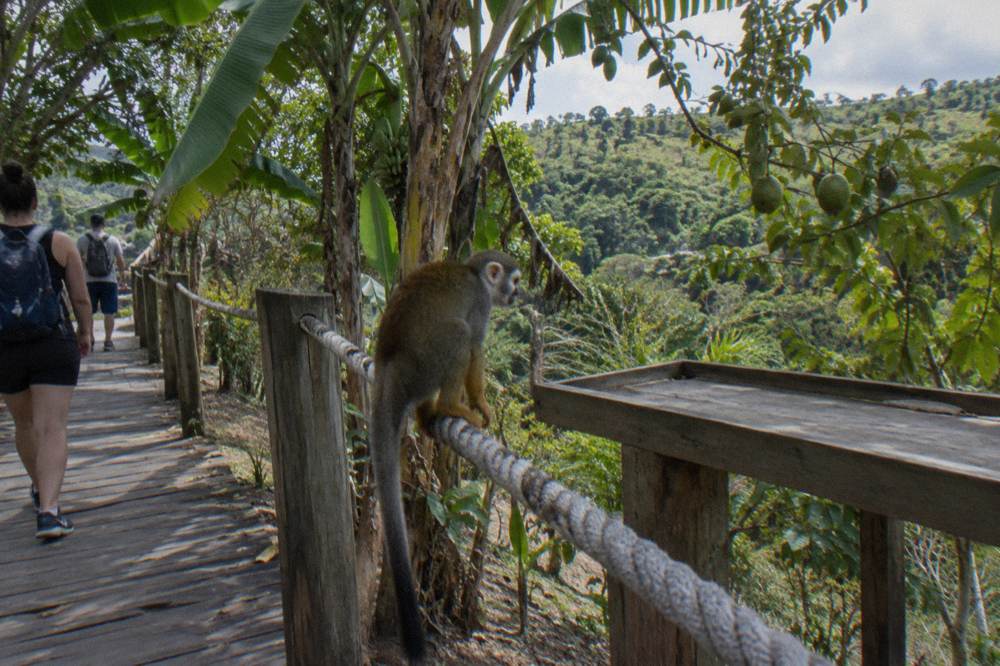
The squirrel monkeys at Monkeyland are small, quick primates, kept in a five-acre park in the Anamuya hills. Guides lead visitors through on foot, and the listings describe monkeys taking food from hands and perching on shoulders during roughly 45 minutes of contact time, followed by a plantation and cultural portion on most tours.
Squirrel monkeys are the species of this story. They are not native to Hispaniola, they are native to South American forests, and the animals at the park were brought in for the attraction. They are small, roughly the size of a large squirrel, live in family groups, and are notably bold around people, which is what makes the feeding format possible. The Dominican Republic's official tourism portal describes the setting plainly: five acres of countryside outside Punta Cana where two families of squirrel monkeys greet visitors, can be fed by hand, and are often photographed carrying infants on their backs.
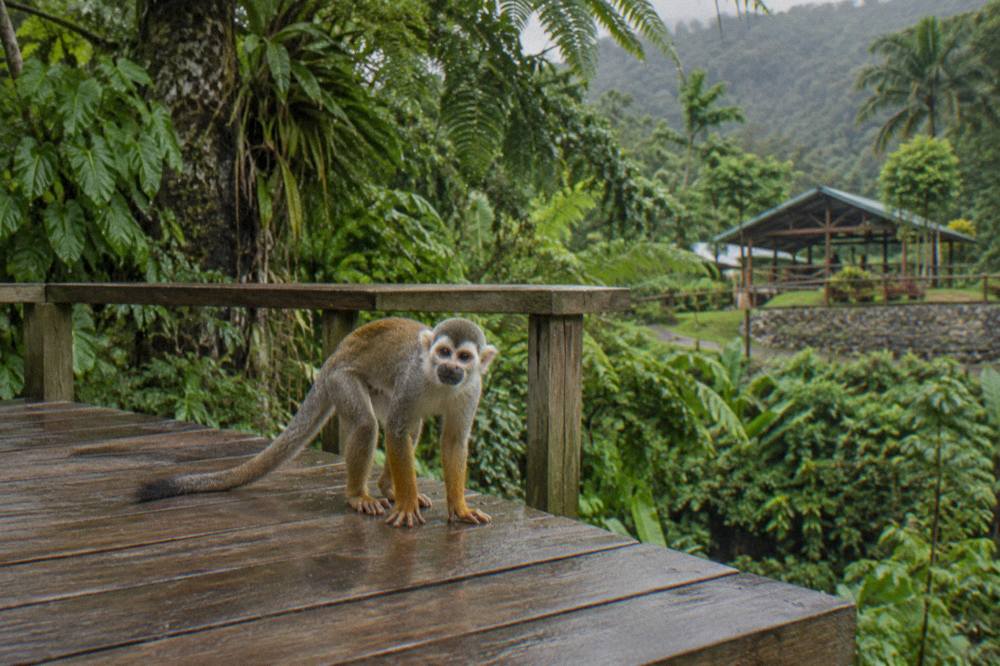
The standard visit, on the listings we track, is built in three parts. First the drive inland from the resort zone into the hills. Then the monkey encounter itself, guided, on foot, with rules: no sunscreen or insect repellent on the interaction, a restriction the Runners Adventures listing states to protect the animals, and health screening that excludes pregnant visitors and people with heart conditions, epilepsy or upper respiratory infections. Finally a plantation stop with coffee and cacao, often a typical Dominican house. The featured Monkeyland and Plantation Safari runs 6 hours door to door, from $95 per person, with hotel pickup and drop-off listed, bottled water included, and a 4.8 rating from 4,865 reviews. The half-day version of the same visit, from the same operator, runs 5 to 5.5 hours from the same price with a 4.6 rating from 1,648 reviews.
The rules deserve a moment of attention because they catch visitors out. The sunscreen and repellent ban is enforced at the gate on the interaction itself, so apply nothing from the neck down before the monkey section and keep it in your bag for the plantation walk afterward. The exclusion list is medical, not bureaucratic: monkeys can carry organisms that are trivial to them and a genuine risk to someone with a compromised respiratory system, and the operators screen accordingly. One rule to know before you book: people with severe peanut allergies cannot take part in the Monkeyland tours listed here. Bring cash in small bills for locker fees, tips and souvenir photos, which most tours do not include in the price.
A second Punta Cana option changes the animal mix rather than the length. The Monkey House VIP Animal Sanctuary Experience, from $90 per person for 2 hours 30 minutes, is a shorter visit at a smaller sanctuary, and reviewers mention several kinds of monkey to meet. It is rated 4.9 from 61 reviews, a much smaller pool than Monkeyland's, and it is wheelchair accessible where most Monkeyland listings are not. For a family with small children or a traveler short on time, that shorter format is a genuine alternative rather than a downgrade. The listing also permits cameras in the second part of the visit, with belongings stored during the first, which is a different photography setup than the open Monkeyland format. Either way, close encounters with captive monkeys raise fair welfare questions, and our look at whether Monkeyland treats its animals ethically weighs what operators claim against what visitors actually report.
What you should not expect, from any listing, is a guaranteed performance. Monkeys are animals, not actors. The listings describe contact and feeding as the normal shape of the visit, and thousands of reviews back that up, but group size, time of day and the monkeys' own mood change the texture of an encounter. A morning slot with a dozen visitors plays differently from a late-afternoon slot with thirty. Book the visit for what it is, a guided hour with habituated animals, and it reliably lands.
For readers deciding between the standard visit and bigger combo days, the pairing question usually comes down to whether you want ziplines in the same booking.
Other Animals People Associate With Punta Cana
Beyond the monkeys, the animals Punta Cana is associated with are humpback whales, seen on Samana Peninsula tours between January and March; rhinoceros iguanas, native reptiles of the dry coastal zones; and a long list of birds and reef fish. None of these, except the whales, anchors a headline tour the way the squirrel monkeys do.
Humpback whales are the region's other famous animal. Every winter, North Atlantic humpbacks migrate to the warm, shallow banks off the Samana Peninsula to breed and calve, and whale watching boats run from Samana town through the season. It is a real, scheduled, seasonal phenomenon, unlike anything else on this list, and it is the one Punta Cana area animal experience that is genuinely wild. The trade-off is distance: Samana is a long day trip from Punta Cana, and the tours that connect the two are full-day commitments. If your trip falls in the whale months and you want both signature animals, the practical shape is one day for monkeys, one day for whales.
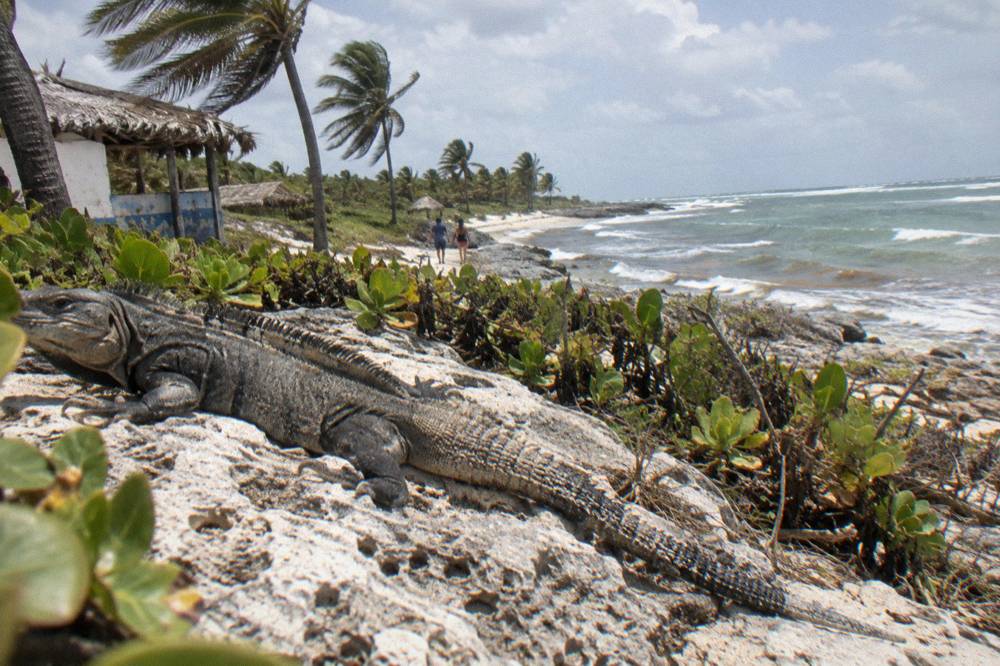
Rhinoceros iguanas are the quieter claim to fame. These heavy, dull-gray lizards with horned snouts are endemic to Hispaniola, meaning they live here and nowhere else, and they turn up in the dry scrub and cactus zones away from the beaches. Visitors sometimes spot them on the countryside drives that monkey tours take inland, and the plantation and safari portions of Monkeyland tours pass through exactly that terrain. Unlike the monkeys, nobody books a tour for an iguana, but they are the most authentically Dominican large animal most visitors will casually see. Our longer write-up in the wild animals of the Dominican Republic guide covers the rest of the list, from hutias to manatees.
Birdlife rounds out the picture. The inland hills hold parrots, hummingbirds and the various migratory species that pass through the Caribbean flyway, and the plantation stops on the standard monkey tours include a botanical garden walk on several listings where guides point out medicinal plants and fruit trees. Reef fish, stingrays and the occasional sea turtle appear on the snorkeling trips that leave from the Punta Cana beaches. None of these carries the fame of the monkeys, but they fill out a trip for visitors with more than one excursion day to spend.
The table below puts the area's animal encounters side by side, honestly, including which ones are in parks and which are wild.
| Animal | Where you encounter it | Wild or managed | Tour commitment |
|---|---|---|---|
| Squirrel monkeys | Monkeyland park, Anamuya hills; Monkey House sanctuary | Managed, enclosed parks | 2.5 to 6 hours from Punta Cana, from $90 per person |
| Humpback whales | Samana Peninsula boat trips, winter season | Wild, seasonal | Full-day trip from Punta Cana |
| Rhinoceros iguanas | Dry coastal scrub, sometimes visible on countryside drives | Wild, no guarantee | Incidental to other tours |
| Reef fish and rays | Snorkeling sites along the coast | Wild | Half-day snorkel trips |
| Birds, including parrots | Inland forests and plantation zones | Wild, vary by season | Incidental to safari tours |
The pattern in that table is the honest summary of animal tourism in the Punta Cana area: the reliable, bookable animal encounter is the managed one, and the wild ones are either seasonal, incidental, or both. This is not a defect. It is the shape of wildlife on a heavily developed resort coast with an island ecosystem that lost its only native monkey millennia ago. If you want more background on how Hispaniola's fauna ended up this way, the story of the extinct Hispaniola monkey makes good reading before your trip.
How To Pick A Monkey Tour Around Punta Cana
Pick by duration, format and review pool rather than by park name. The core Monkeyland visits run from $95 per person, the monkey and zipline combo from $130, and the full adventure bundle with buggies from $209. Ratings range from 4.6 to 4.9, and the review pools range from a few hundred to over thirteen thousand, which matters more than a decimal of rating.
Start with how much day you want to spend. Travelers with a morning free do well on the half-day Monkeyland safari, 5 to 5.5 hours, from $95 per person, which covers the monkey encounter and the plantation stops without eating the whole day. Families or pairs who want the full classic choose the featured Monkeyland and Plantation Safari at 6 hours, same price floor, the most reviewed monkey-focused listing after the big combos. Anyone whose holiday plan is "one big excursion day" is better served by a combo, and the combo question is really a zipline and buggy question.
In the lineup below, the monkey encounter stays the same while everything around it changes, which makes it easy to spot what each price really covers.
| Tour | Price | Duration | Meal listed | Rating and reviews |
|---|---|---|---|---|
| Punta Cana: Monkeyland Half-Day Safari and Plantation | From $95 per person | 5 to 5.5 hours | Not stated | 4.6 from 1,648 reviews |
| Monkeyland and Plantation Safari from Punta Cana | From $95 per person | 6 hours | Not stated | 4.8 from 4,865 reviews |
| Punta Cana Monkeyland and Zipline Two Adventures in One Day | From $130 per person | 8 hours | Dominican lunch listed | 4.8 from 1,227 reviews |
| Adventure Bundle: Monkeyland, Ziplines & Buggies Punta Cana | From $209 per person | 9 hours 30 minutes | Dominican lunch listed | 4.9 from 13844 reviews |
| Monkey House VIP Animal Sanctuary Experience | From $90 per person | 2 hours 30 minutes | Not stated | 4.9 from 61 reviews |
Read the fine print on the listing rather than assuming. Pickup is listed on most of these tours but not all of them, and one buggy listing specifically does not confirm pickup, so check the meeting details for your hotel area before booking. Gratuities and photos are typically excluded on several Monkeyland tours. Health restrictions come down to the same points from one operator to the next: the interaction is off limits to pregnant visitors and people with heart conditions, epilepsy or upper respiratory infections, and several tours also exclude anyone with a severe peanut allergy. If someone in your party is affected, the Monkey House VIP listing is the accessible-friendly alternative, wheelchair accessible with a shorter format.
Every tour here comes with free cancellation, which softens the booking decision considerably, but the terms live on each operator's own page and the window varies, so confirm it there before you commit a large group. Travelers staying in an Airbnb rather than a hotel should also check the pickup details carefully: at least one of these tours sets a meeting point for Airbnb guests instead of a door pickup, a detail better discovered at booking than at 7 AM.
Timing plays a smaller role than people expect. The parks run tours year round, and Punta Cana's weather is warm throughout; typical daytime highs sit between 28 and 32 degrees C, with October among the wetter months. The official Atlantic hurricane season runs from 1 June to 30 November per the National Hurricane Center, and tours generally operate in ordinary rain. The practical variables are heat and crowds: morning departures dominate the listings for good reason, and pickup windows for the half-day tours run in the 7:00 to 8:10 AM range for the morning slot, with afternoon pickups between 1:00 and 2:10 PM on the same listing.
For the one-big-day traveler, the bundle that stacks all three activities is the listing that made the region's monkey tour famous at scale.
Common Questions About Punta Cana Animals
Are There Wild Monkeys In Punta Cana?
No. The Dominican Republic has no wild monkey population. The only native primate, the Hispaniola monkey, is extinct and known from fossils. Every monkey encounter near Punta Cana takes place at a managed monkey park such as Monkeyland or Monkey House.
What Is The Cheapest Monkey Tour From Punta Cana?
The Monkey House VIP Animal Sanctuary Experience starts from $90 per person for 2 hours 30 minutes. The standard Monkeyland visits start from $95 per person, and combos start from $130. All prices are per person unless a listing states per group.
Can You See Whales From Punta Cana?
Not from the beach, but yes on a tour. Humpback whales winter off the Samana Peninsula between roughly January and March, and full-day whale watching trips connect Punta Cana with Samana during the season. It is the area's one large wild animal encounter you can schedule.
Why Do Listings Say The Monkeys Live In A "natural Habitat"?
That is operator marketing copy. The parks are enclosed, about five acres. These are enclosed, managed monkey parks where the monkeys come to visitors. The squirrel monkeys were brought to Hispaniola and are kept at the sites; the encounter is real and guided, but it is not a wild sighting, and no tour can offer one.
If the monkey visit is the one you want, these are the three listings this site compares most often for Punta Cana.