Is Monkeyland In Punta Cana Ethical?
An honest look at what operators say about animal welfare at Monkeyland in Punta Cana, what visitor reviews report, and what no independent review has confirmed.
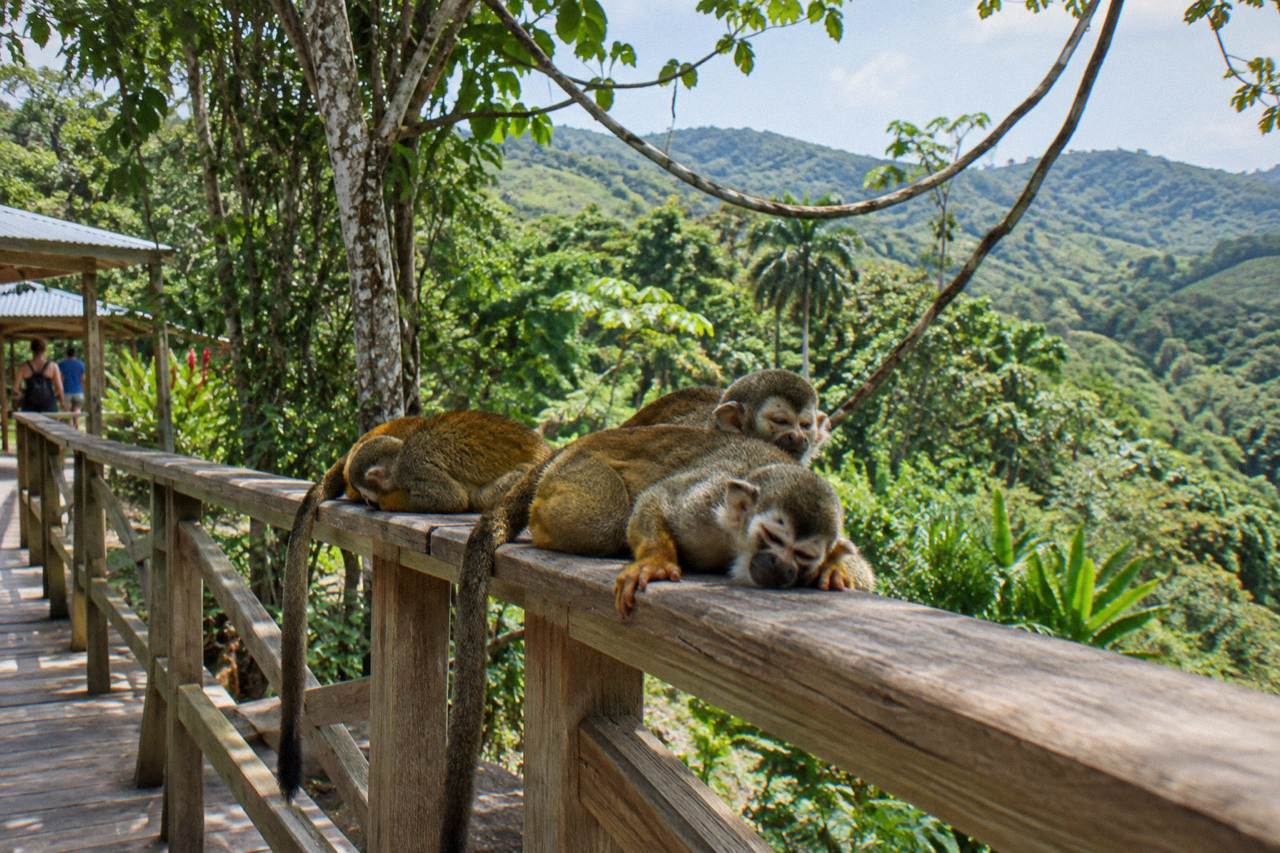
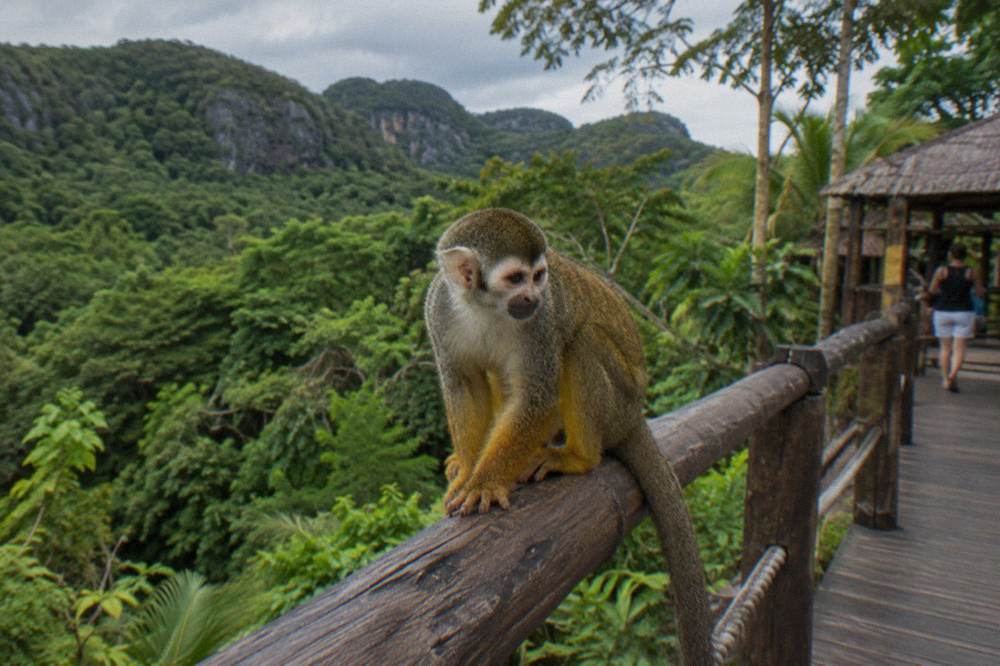
Nobody can honestly declare Monkeyland ethical or unethical, because no independent evidence exists to settle the question. The park is a five-acre commercial operation in the Anamuya hills where visitors feed squirrel monkeys, a species not native to the country, that were brought there for the attraction, and while operators publish interaction rules and describe welfare measures, we found no independent welfare audit, regulator statement, or third-party review.
The Dominican Republic has no native wild monkeys today. The only monkey that ever lived wild on Hispaniola, the Hispaniola monkey, is extinct and known only from cave fossils, a fact the paleontological record establishes clearly. Every monkey a visitor meets at Monkeyland belongs to a population kept there deliberately for tourism. That single point reframes the whole ethics question: this is not a wildlife experience, it is a visit to a managed animal park, and it should be judged by the standards of one.
The park appears on the official Dominican Republic tourism portal, which describes five acres of countryside where two families of squirrel monkeys greet visitors and can be safely fed by hand while guides explain the species. The same portal entry confirms there is no standalone Monkeyland website; visitors reach the park almost entirely through tour operators. Those operators, chiefly Runners Adventures and its partners, control the information that exists about how the animals live, which is exactly why an independent voice is so hard to find.
Where The Monkeyland Squirrel Monkeys Actually Come From
The squirrel monkeys at Monkeyland are not native to the island and did not arrive on their own; they are an introduced species kept in an enclosed five-acre park for tourism. The country's only native monkey, the Hispaniola monkey, died out during the Holocene and survives only as fossils in Dominican caves. So no monkey experience in the Dominican Republic is a wild encounter, and Monkeyland's animals depend entirely on the park for their care.
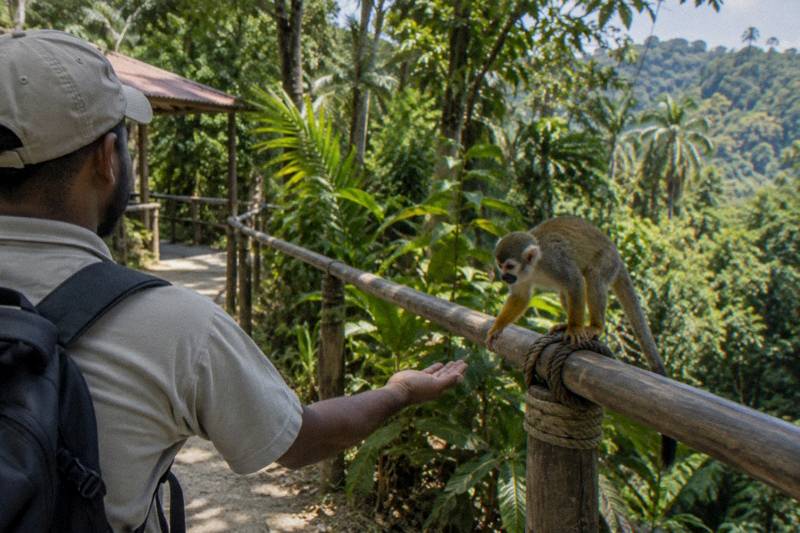
This matters for the ethics question more than most visitors realize. A sanctuary, in the sense most people mean, takes in injured, rescued, or confiscated animals and usually operates as a charity. Monkeyland does not present itself that way. The tourism portal and the operator listings describe a visitor attraction: monkeys that are habituated to people, take food from hands, and in the words of one listing may sit on shoulders and eat from visitors' palms during a roughly 45-minute guided encounter.
Habituation is the product being sold. The monkeys' comfort around humans is the result of deliberate conditioning, not a natural state for the species. Squirrel monkeys live in large social groups and cover wide areas; whether a five-acre enclosed park can meet those needs is a question a welfare biologist could answer, and no such assessment of Monkeyland is publicly available. Visitors who want a deeper look at the island's lost native primate can read about it in the extinct Hispaniola monkey guide.
None of this makes the park cruel by definition. Zoos and licensed animal parks exist on a wide spectrum, and many do genuine conservation and education work. But it does mean the marketing language deserves scrutiny. Despite what the listings say, this is an enclosed monkey park of about five acres where the monkeys come to visitors. Monkeyland is an enclosed monkey park where the monkeys come to visitors, and that is how this site describes it. The accurate description is an enclosed park in the Anamuya hills where kept squirrel monkeys interact with paying visitors.
What Operators State About Welfare At Monkeyland
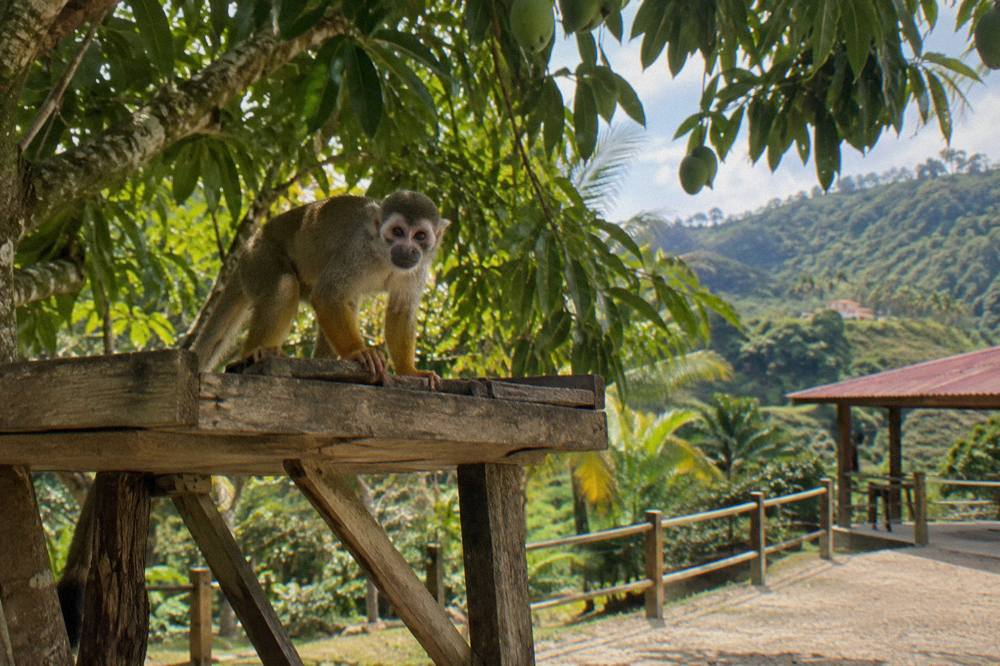
Operators describe a set of welfare measures: limits on daily visitor numbers, veterinary oversight, guides who lead the interaction rather than leaving visitors to wander, and rules telling guests to skip sunscreen and insect repellent before the monkeys. The Runners Adventures listing states that visitors with colds or upper respiratory infections cannot enter, that pregnant women cannot join, and that monkeys take food only under guide supervision. These are operator statements, not independently verified findings.
The most detailed public rules come from the operator's own listing for the half-day safari. Beyond the health screening, it asks visitors to wear comfortable clothes, skip lotions and sprays before the encounter, and follow guide instructions throughout. The reasoning behind the repellent and sunscreen ban is easy to infer: the monkeys climb on people and would ingest whatever is on their skin and clothes. Framed that way, the rule reads as protection for the animals, and its presence at least shows the operator has thought about contact chemistry.
Operators also describe the visit as a structured, guided walk rather than an open petting zoo. The encounter lasts about 45 minutes in the company of a guide, with food provided by the park, and several operator pages mention that daily visitor numbers are limited for the animals' benefit. Education is part of the pitch too; guides talk about the species, and the tourism portal entry emphasizes that guides share information about the monkeys as visitors observe and feed them.
| Welfare claim | Who states it | Independent verification |
|---|---|---|
| Limited daily visitors for animal welfare | Operator pages | Not found |
| Veterinary oversight of the monkeys | Operator pages | Not found |
| Guided 45-minute interaction with park-provided food | Operator listings and tourism portal | Consistent across sources, not audited |
| No sunscreen or repellent before contact | Runners Adventures listing | Stated as a rule, effectiveness not studied publicly |
| Five-acre enclosed park, not a wild habitat | Tourism portal | Confirmed by the official description |
The honest summary of that table: the people who profit from the park are also the main source of information about how its animals are treated. That is common in tourism and not proof of anything bad, but it is a structural conflict of interest a careful reader should notice. For comparison, Monkeys in Dominican Republic puts every monkey tour side by side, with prices, durations and operators grouped so you can compare at a glance.
An ethics-minded reader deciding whether to book at all might reasonably want the reassurance of flexible plans. Free cancellation is listed on the main Monkeyland tours, so a booking made now can still be reconsidered.
The Health Rules That Shape The Interaction
Operators publish a set of interaction rules: no sunscreen or repellent, no entry with a cold or upper respiratory infection, and no participation for pregnant visitors or people with heart conditions, epilepsy, or mobility problems. Visitors with severe peanut allergies cannot take part in some combos.
Read as a set, these rules sketch the shape of the contact. Respiratory screening exists because diseases can pass between humans and primates in both directions, and the exclusion of visitors with active colds is the single strongest welfare signal in the published material, since it costs the operator bookings. The sunscreen and repellent ban protects the monkeys from ingesting chemicals. The monkey encounter is not open to visitors with severe peanut allergies.
The exclusions cut the other way too. They tell you the encounter is close enough that a running nose or a scented lotion is considered a real risk to the animals, which is worth knowing before picturing the experience. This is hands-on proximity: food taken from palms, monkeys possibly climbing on visitors, photographs at arm's length. Travelers who want to watch without touching have options too, and the distinction matters enough that we cover it separately below.
Some of the rules are stated as safety or liability measures for visitors rather than welfare measures for monkeys, and the listings do not separate the two. The monkey interaction pages at Runners Adventures frame visitor preparation, guide supervision, and animal care as one continuous set of instructions, which is how the visit actually runs: a guide manages the people and the food at the same time.
What Visitor Reviews Say About The Monkeys
Reviews of the main Monkeyland tours are strongly positive about the experience and rarely critical of the animals' condition. The featured plantation safari tour holds a 4.8 rating from 4,865 reviews, and the half-day safari a 4.6 from 1,648 reviews. Guests repeatedly describe healthy-looking, active monkeys and attentive guides; we found no pattern of welfare complaints in the review summaries available to us.
Review pools that large mean something, but they measure visitor satisfaction, not animal welfare. A delighted reviewer and a stressed monkey can share the same 45 minutes. Still, the absence of recurring welfare complaints across many thousands of reviews is a real data point: when animals look sick, thin, or badly kept, cruise and resort travelers tend to say so loudly, and that signal is not present in the material we can read.
The Adventure Bundle that pairs Monkeyland with ziplines and buggies is the most reviewed tour on this site, at 4.9 from 13,844 reviews. It includes the same park visit, so the monkey encounter itself has been through an enormous amount of public feedback. Again, that feedback is about enjoyment. It cannot substitute for an inspection, and an honest article does not pretend otherwise.
For visitors whose concern is the format of the interaction itself, the Monkey House VIP Animal Sanctuary Experience in Punta Cana offers a different model: a shorter, 2.5-hour visit built around close contact with the sanctuary's monkeys, rated 4.9 from 61 reviews, from $90 per person.
What We Could Not Verify About Monkeyland's Welfare
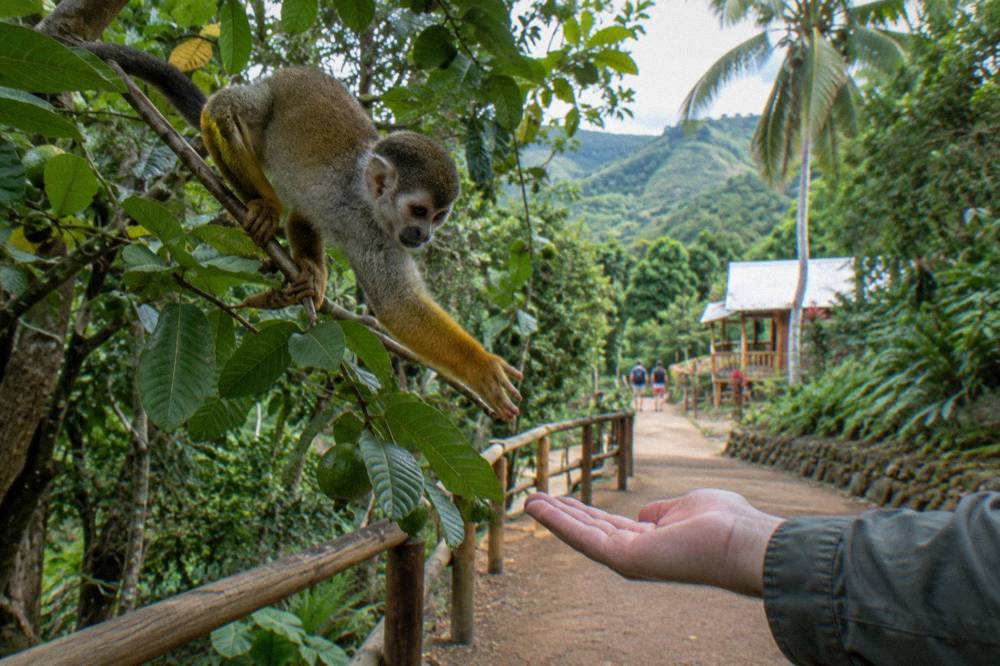
We could not verify the monkeys' origin, their veterinary care, their enclosure conditions beyond the five-acre figure, their lifespan at the park, or any breeding policy. No independent welfare audit, government inspection report, or animal charity assessment of Monkeyland exists in public sources we could locate. Operators describe welfare measures; nobody outside the business has checked them.
That list of unknowns is long, and it is the core of this article. When we compared the listings and searched for third-party scrutiny, the result was consistent: no exposé, no regulator statement, no accreditation, and no welfare charity review. Search engines show that people ask whether Monkeyland is ethical, which means the question is common, but asking a question and answering it are different acts, and no qualified body has done the second one publicly.
A few specifics deserve emphasis. The claim of limited daily visitor numbers appears on operator pages and nowhere else, so the actual cap, if one exists, is unknown. The veterinary oversight claim follows the same pattern. The monkeys' diet beyond the visitor feeding is unpublished. Whether the population breeds at the park, and what happens to any offspring, is not stated anywhere we could find. None of these gaps proves a problem, and this site does not invent accusations to fill them.
The contrast with Monkey Jungle in Sosua is instructive. That venue's own homepage states plainly that profits fund a non-profit organization, HADAC, which runs medical and dental clinics for local communities, and its cash-only gate prices are published openly. Whether that model serves its animals better is still unverifiable, but the disclosure is fuller, and a visitor weighing ethics may reasonably weigh transparency too. The Monkeyland versus Monkey Jungle comparison breaks down the two visits side by side.
How Monkeyland Compares With Other Monkey Visits In The Country
Visitors can pick from three formats: feeding interaction parks like Monkeyland and its Puerto Plata and Samana siblings, observation-only garden visits, and self-drive gate entry at Monkey Jungle in Sosua. Interaction tours run from $65 per person, observation tours from $89.30 per person, and Monkey Jungle's cash-only gate is $50 for adults. The ethical weight differs by format, not just by venue.
Interaction is the controversial part. Feeding habituated monkeys, letting them climb on visitors, and photographing them at close range is what attracts most bookings and what critics of animal tourism question most. Observation-only tours remove the contact but keep the captivity question. Gate-entry venues leave the visitor alone with their choices, with no guide structure at all. None of these formats is automatically more ethical; each trades a different set of animal impacts against a different visitor experience.
| Format | Example tour | Price basis | Contact level |
|---|---|---|---|
| Feeding interaction, guided | Monkeyland and Plantation Safari from Punta Cana | From $95 per person, 4.8 from 4,865 reviews | Hand feeding, monkeys may climb on visitors |
| Short port interaction | Monkey Interaction Shore Excursion from Amber Cove and Taino Bay | From $65 per person, 5.0 from 16 reviews | Enclosed interaction, monkeys climb for photos |
| Observation only | Puerto Plata: Monkey Tour from Taino Bay & Amber Cove | From $89.30 per person, no reviews yet | No touching, holding, or feeding permitted |
| Multi-species sanctuary visit | Monkey House VIP Animal Sanctuary Experience | From $90 per person, 4.9 from 61 reviews | Close contact with monkeys; species not named in the listing |
| Gate entry, self-guided | Monkey Jungle, Sosua (booked direct) | $50 adult, $40 child, cash only | Feeding visit on the venue's own terms |
The observation-only entries deserve a second look from cautious readers. The Taino Bay and Amber Cove monkey tour states explicitly that touching, holding, and feeding are not permitted, and the Puerto Plata sightseeing tour that includes cows and pigs carries the same observation-only rule. Those products answer the demand to see monkeys without the handling that troubles some visitors, though the animals are still kept for tourism either way.
Location matters too. The north coast options are covered in detail in the Monkeyland Puerto Plata tours guide, and readers based in Punta Cana comparing overall value may prefer the worth-it verdict on the Punta Cana park. The ethics question and the value question overlap but are not the same.
Questions An Ethics-Minded Visitor Can Ask Before Booking
Practical scrutiny beats paralysis: ask who operates the tour, what the interaction rules are, whether contact is guided or free, what food the monkeys receive, and what the cancellation terms are. Every Monkeyland tour comes with free cancellation, the operator is named upfront, and the interaction rules are published before you pay. A tour that hides those details is the one to decline.
Start with the operator. Runners Adventures runs the Monkeyland listings from Punta Cana, Puerto Plata, Samana, La Romana, and Juan Dolio, and smaller operators like Monkey House VIP and local partners run the alternatives. A named, established operator with thousands of reviews at least has a reputation to protect, which is a weak but real form of accountability. Anonymous resellers with no operator name are a reasonable place to draw a line. Once you've found an operator you trust, the comparison of Punta Cana's top excursions shows how a Monkeyland visit stacks up against the other big tours on price and reviews.
Then read the rules as a welfare map. The half-day safari's exclusions, no sunscreen, no repellent, no colds, no pregnancy, no heart conditions, describe close, managed contact. If a listing instead promises unlimited handling or photos with no stated rules, that is a signal about how the animals are treated. Ask what the monkeys are fed during the visit, since park-provided food under guide control is a better sign than visitors handing over whatever they like.
Consider the alternatives honestly. If feeding a kept monkey sits badly with you after reading this far, the observation-only Puerto Plata tour costs more than the cheapest interaction and delivers less spectacle, but it matches its format to a lighter footprint. If your concern is corporate transparency rather than contact itself, Monkey Jungle's published prices and stated non-profit funding offer the most disclosed model in the country, at the cost of organizing your own transport to Sosua.
Finally, decide what you would do with a bad answer. Monkeyland tours come with free cancellation, so the decision does not have to be final at the moment of booking. A visitor who arrives, sees conditions that trouble them, and walks away has made an ethical choice too, and no guidebook can pre-make it.
For readers ready to compare the specific options, the two Punta Cana safaris and the sanctuary visit below cover the range from plantation tour to multi-species encounter.
Common Questions About Monkeyland Ethics In Punta Cana
Are The Monkeys At Monkeyland Wild?
No. Squirrel monkeys are not native to the Dominican Republic; the island's only native monkey is extinct. The monkeys at Monkeyland are kept in an enclosed park for visitor encounters.
Does Monkeyland Limit Visitor Numbers?
Operator pages say daily visitors are limited for the animals' welfare. The specific cap is not published and the claim has not been independently verified.
Can I Visit Monkeys In The Dominican Republic Without Touching Them?
Yes. Observation-only tours exist on the north coast, such as the monkey tour from Taino Bay and Amber Cove, which states that touching, holding, and feeding are not permitted.
Is There An Ethical Alternative To Monkeyland?
Formats differ rather than venues being ranked. Monkey Jungle in Sosua publishes its prices and states that profits fund the HADAC non-profit clinics, making it the most transparent option, though its animal care is equally unverified.