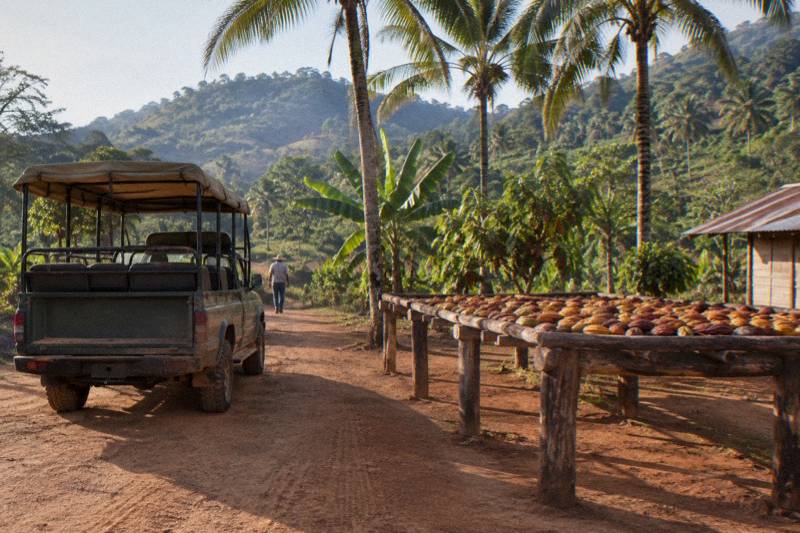
Are Squirrel Monkeys Friendly To Humans?
How squirrel monkey encounters work in the Dominican Republic, the hand feeding rules operators set, and what visitors actually report from Monkeyland and the other parks.
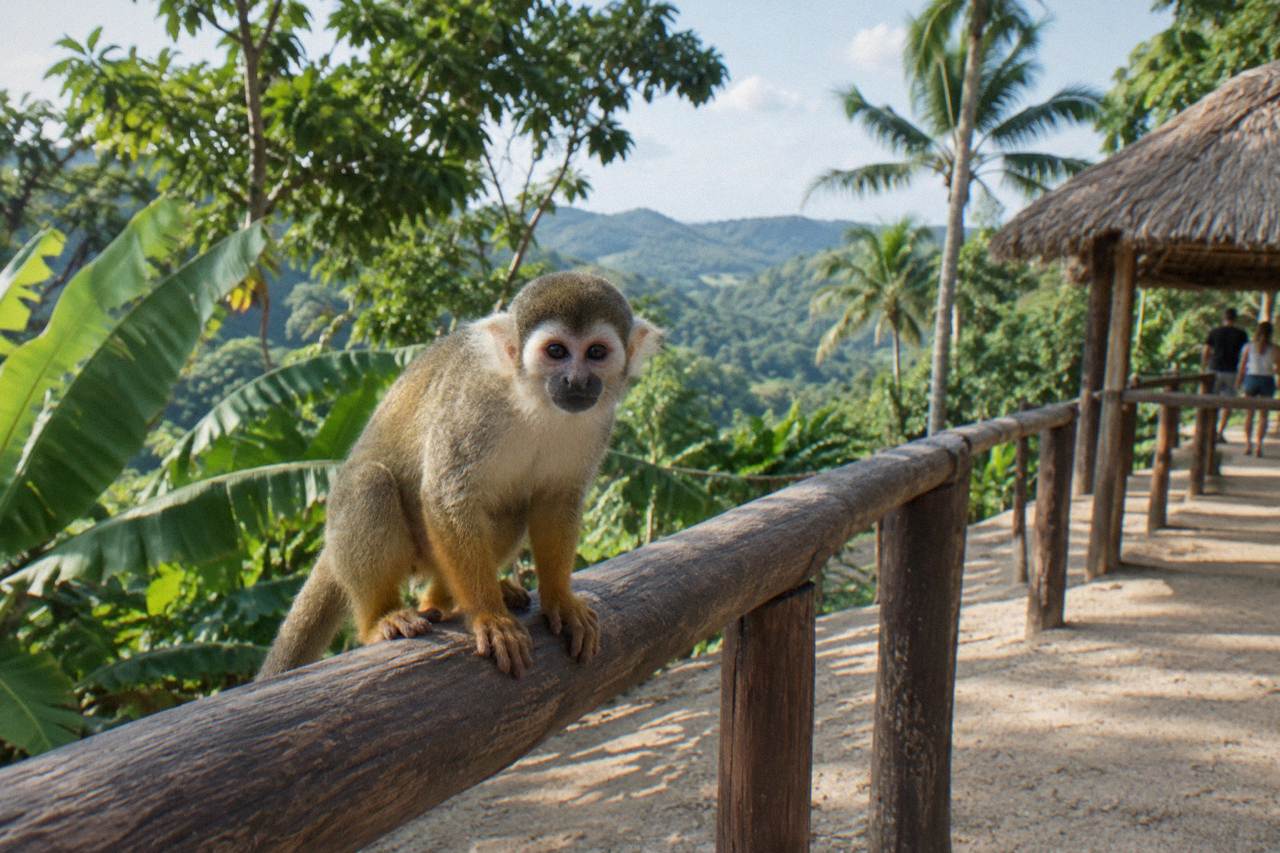
Squirrel monkeys have small bodies, quick hands and unusually direct eyes, and at the Dominican Republic's monkey parks they do something wild primates almost never do: they come down to people. Visitors hold out fruit, and the monkeys take it. Some climb onto shoulders. The Dominican Republic has no native wild monkeys; the only monkey species ever native to Hispaniola, the Hispaniola monkey, is extinct, known today only from cave fossils. Every squirrel monkey a visitor meets on this island lives in an enclosed park, habituated to humans by design. That habituation is what the friendliness question is really about.
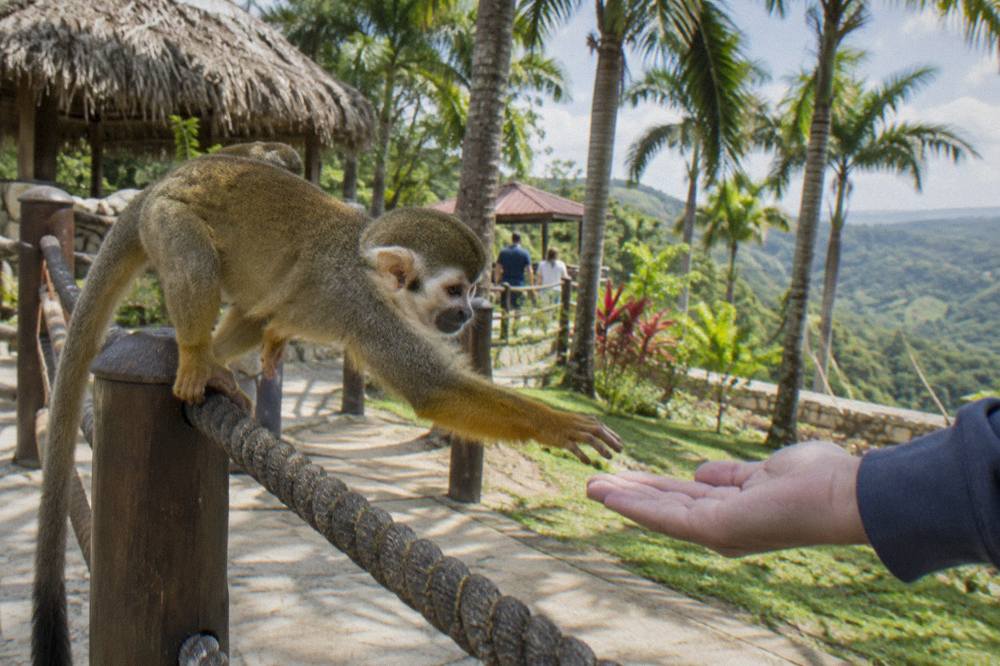
Habituated squirrel monkeys, the kind kept at Monkeyland and the other Dominican parks, are described by operators and visitors as calm, curious and comfortable taking food from human hands, and reviews of the Punta Cana tours repeatedly describe monkeys sitting on shoulders and eating from palms. That friendliness is trained tolerance, not affection. Wild squirrel monkeys that have never met humans keep their distance, and no responsible tour promises a specific interaction.
The honest answer starts with a distinction. A squirrel monkey in an untouched stretch of South American forest is not friendly in any sense a tourist would recognize. It is a small, alert primate that lives in troops of dozens, watches for hawks and snakes, and treats anything large as a threat. What visitors meet in the Dominican Republic is the other thing entirely: monkeys born into or raised around a park setting, where humans arrive every day carrying fruit. The park's own listing language is careful. The official Dominican tourism portal describes Monkeyland as set on five acres of countryside where two families of squirrel monkeys "greet and charm visitors" and "can be safely fed by hand" (GoDominicanRepublic, Monkeyland). That is a description of habituated animals in a managed enclosure, not a claim about the species' temperament.
So when people ask whether squirrel monkeys are friendly, two questions hide inside one. Is the species docile by nature? Not particularly; squirrel monkeys are quick, food-motivated and easily startled, which is different from docile. Are the monkeys at these particular parks friendly toward the humans who visit them? By every account operators publish and most reviews report, yes, in the limited sense that they approach, take food and tolerate close presence. The Monkeyland and Plantation Safari Tour from Punta Cana, the most established listing of this kind on this site, describes a guided visit for close observation and feeding of the squirrel monkeys in their 5-acre park, and its 4,865-review pool sits at 4.8, a rating built almost entirely on that encounter going pleasantly. You can see the tour's full details here.
If you are preparing for the encounter, these are the three listings we compared on this question: the standard plantation safari, the shorter half-day version of the same park visit, and a different format entirely, a small sanctuary with several monkey species.
Where You Actually Meet Squirrel Monkeys In The Dominican Republic
Every bookable squirrel monkey encounter in the Dominican Republic happens inside an enclosed park: Monkeyland in the Anamuya hills outside Punta Cana, a sister operation reachable from Puerto Plata and Samana, and a handful of smaller sanctuaries and cruise-port excursions. There are no wild squirrel monkeys anywhere on the island, so a park booking is the only way this meeting happens. One thing to sort out before your park day is the Dominican Republic E-Ticket form for arriving tourists, which walks through who needs it, when to submit it, and the passport rules that apply.
Monkeyland is the name visitors hear most, and it covers more ground than most people realize. The original park covers five acres in the Anamuya hills. It has no website of its own, so bookings go through tour operators, and Runners Adventures runs most of the tours that visit it. The same brand name also appears on tours departing Puerto Plata and Samana, which are different products with different durations and prices even though the listing titles look similar. The Monkeyland and Plantation Safari from La Romana, the full-day version from Juan Dolio, and the half-day safari from Bayahibe all route to the same style of visit from different coasts. Our guide to Monkeyland tours from Punta Cana breaks down which departure area fits which trip.
Beyond the Monkeyland family there are other options. Monkey House VIP, a 2 hour 30 minute experience from $90 per person, is a sanctuary listing built around close contact with monkeys; it holds a 4.9 rating from 61 reviews. Cruise passengers docking at Amber Cove or Taino Bay have their own short options, including a 50-minute monkey interaction shore excursion from $65 per person that lists a 5.0 rating from 16 reviews. Up the north coast near Sosua, Monkey Jungle is a separate venue with its own admission counters, open 9:00 am to 4:00 pm and closed Sundays, cash only; its species are not confirmed on its readable official pages, so we simply say monkeys there (Monkey Jungle official site).
| Experience | Where it departs | Duration | From (per person) | Contact described by the operator |
|---|---|---|---|---|
| Monkeyland and Plantation Safari | Punta Cana | 6 hours | $95 | Close observation and feeding in the 5-acre park |
| Monkeyland Half-Day Safari and Plantation | Punta Cana | 5 to 5.5 hours | $95 | 45-minute guided tour, monkeys take food close up |
| Monkey House VIP Sanctuary | Punta Cana | 2 hours 30 minutes | $90 | Close contact with monkeys, species not named in the listing |
| Monkeyland Puerto Plata | Puerto Plata | 4 hours 30 minutes | $69 | Visitors feed monkeys fruit in a sanctuary setting |
| Monkey Interaction Shore Excursion | Amber Cove / Taino Bay | 50 minutes | $65 | Monkeys climb on shoulders and hands for photos |
A word on the one park we cannot describe. The extinct Hispaniola monkey, the island's only native primate, vanished so long ago that it is known only from fossils in caves like Cueva de Berna; no wild monkey population of any species lives in the Dominican Republic today (Hispaniola monkey). Everything friendly, indifferent or otherwise that a visitor experiences happens inside fences.
How The Hand Feeding Encounter Works
At Monkeyland, the core of the visit is a guided walk of roughly 45 minutes into the monkeys' enclosure, where a guide hands out fruit and visitors hold it flat-palmed while the squirrels come down to take it. Guides stay present throughout, groups move together, and the monkeys choose whether to approach. Nothing in any listing promises a monkey will land on any particular visitor.
The mechanics matter more than people expect. The Monkeyland half-day listing describes a 45-minute guided tour where squirrel monkeys approach visitors inside the enclosure and interact closely under supervision. Fruit is the medium of the whole exchange: a guide distributes it, visitors hold pieces out, and the monkeys, who have learned over years that open palms mean food, do the rest. Reviews of the Punta Cana listings describe monkeys taking fruit from hands, sitting on shoulders, and in the tourism portal's own words, carrying infants on their backs while being photographed. That level of calm around humans is the product of daily repetition, not of any individual animal's personality.
The feeding also explains why the rules exist. Squirrel monkeys are small, weighing a few pounds, so skip sunscreen, insect repellent and lotion before the interaction, since anything left on a visitor's skin transfers straight to an animal that takes food from that hand. That is why the operator's rules are specific about arriving with clean skin, and why guides control the food rather than letting visitors bring their own. The pace is set by the animals. On any given day some monkeys hang back, some hover, and a few do the shoulder thing; visitors reporting on the tours describe all of these outcomes, and the rating pools stay high anyway, which suggests most people find the meeting satisfying even when it is quieter than the photos promised.
For visitors who want the encounter wrapped into a longer day, one option pairs the monkey park with a cenote swim and a plantation visit. The Punta Cana Monkey Sanctuary, Cenote and Dominican Culture Tour runs 4 hours from $95 per person, includes the sanctuary entrance, the farm and plantation stops and cenote access, and lists a 4.2 rating from 162 reviews.
The cruise-port version works the same way in miniature. The 50-minute shore excursion from Amber Cove and Taino Bay describes an interactive enclosure where monkeys may climb onto shoulders, hands or heads for photos, with a guide present and bottled water included. Fifty minutes is enough for the feeding itself, not for a plantation tour, and that brevity is exactly why it costs from $65.
The Rules Operators Set Before You Meet The Monkeys
The Runners Adventures listing for Monkeyland states plainly who cannot take part: visitors with heart conditions, mobility problems, epilepsy or upper respiratory infections, and pregnant women. It also instructs visitors not to wear sunscreen or insect repellent before the interaction, to dress comfortably, and to bring a camera and cash. These are health rules aimed at protecting the monkeys as much as the people.
The respiratory rule is the one that surprises visitors and deserves explanation. Squirrel monkeys in a park live in a fixed group with fixed exposure; a human cold, carried on hands or breath, moves through that group in a way it never could in a scattering wild troop. Several Monkeyland listings repeat it: people with a cold or flu cannot take part in the interaction. The sunscreen and repellent ban serves the same logic from the other direction, since anything scented or chemical on a hand soon reaches a monkey's mouth. These rules come from the operator's own booking pages, and the tour operator's description of the park spells out the supervised encounter format (Punta Cana Tours, Monkeyland).
| Rule as listed | Who states it | What it protects |
|---|---|---|
| No sunscreen or insect repellent before interaction | Runners Adventures, Monkeyland listings | The monkeys' skin and mouths during hand feeding |
| No visitors with cold or upper respiratory infection | Several Monkeyland and buggy-combo listings | The troop's health |
| Not available to pregnant women | Monkeyland listings, Punta Cana and La Romana | Visitors, per operator policy |
| Heart conditions, epilepsy, mobility problems not permitted | Half-day safari listing | Visitors, on a walking, standing encounter |
| Guides control food and pacing | Standard format across listings | Both, by keeping interactions supervised |
Dress and practical notes round out the preparation. Plan on closed-toe shoes, comfortable clothes, a camera, and cash for tips and souvenir photos. All 28 tours listed here include free cancellation, so you can cancel free of charge if your plans change. Our longer piece on what to wear to Monkeyland in Punta Cana covers the packing side in detail. The short version: clean skin, plain clothes, nothing shiny. One Samana listing even warns that monkeys are attracted to shiny objects, which tells you something about where their attention actually sits.
What Visitors Report About The Monkeys' Behavior
In visitor reviews, squirrel monkeys come across as gentle, quick and food-focused: they take fruit from open palms, ride on shoulders, and grab sunglasses or hats when attention drifts. Reports of aggression are essentially absent from these listings, but so is any guarantee; the animals set the tone of each visit.
The numbers first, because they are the only honest way to talk about patterns. The Adventure Bundle combining Monkeyland with ziplines and buggies carries 13,844 reviews at 4.9, and the Monkeyland and Plantation Safari from Punta Cana carries 4,865 reviews at 4.8. Those are enormous pools for an excursion product, and they are built on an animal interaction, which is where excursions usually bleed points. When a monkey visit holds a rating that high across that many visits, the typical experience is not merely acceptable but genuinely likable. The smaller pools tell a quieter story: Monkeyland Puerto Plata holds 4.9 from 1,549 reviews, and the Amber Cove interaction holds 5.0 from 16.
What the reviews actually say is remarkably consistent. Monkeys take food from hands without biting. They climb on people who stand still. They are faster than expected and more interested in the fruit bowl than in being petted, and several listings note that touching, holding or feeding outside the instructed format is not permitted; the observation-focused cruise-port tour from Taino Bay states that plainly in its restrictions. Visitors who arrive expecting cuddles sometimes report mild disappointment, and visitors who arrive expecting to be overwhelmed report the opposite. The friendliness, in other words, is real but transactional: the monkeys are there for the fruit, and their tolerance of humans is the vehicle.
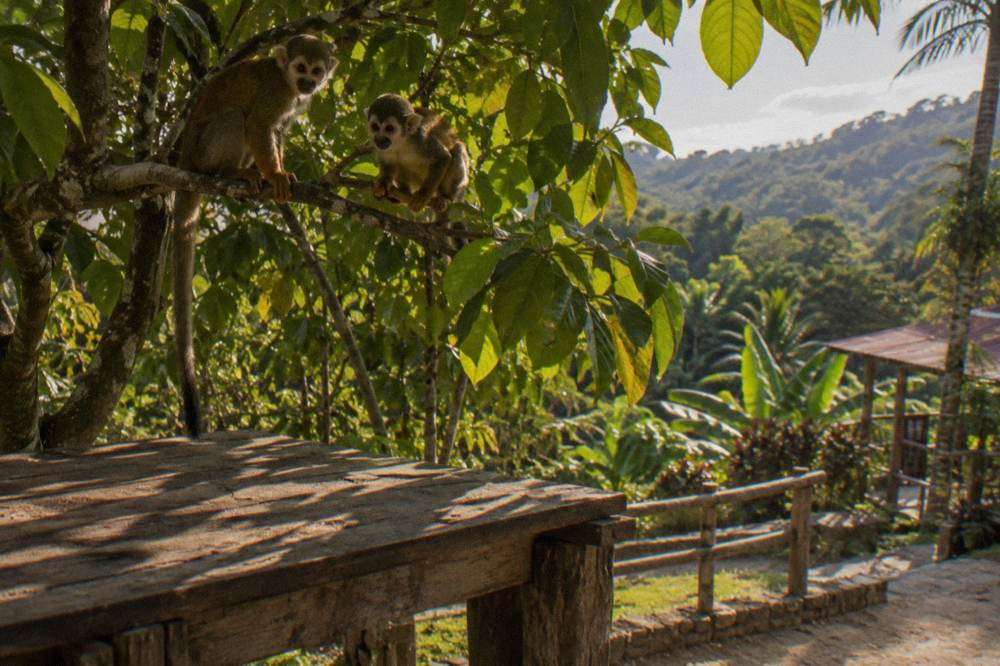
The behavior reports also carry the honest caveats. Animal behavior varies day to day with weather, group size and the troop's own rhythms, and operators run visits rain or shine except in extreme conditions. No tour promises a monkey will sit on any particular shoulder, and a booking reserves your visit, not a guaranteed outcome. Readers weighing the ethical dimension, including what operators state about welfare and what independent review exists or does not, will find that question treated on its own in our Monkeyland ethics piece.
Squirrel Monkeys: Forest Life Versus Park Life
Wild squirrel monkeys travel in troops through South American forests and keep their distance from humans. Nobody approaches or touches them there. In the Dominican parks, the same species lives in small fixed groups, fed by visitors daily, and tolerates handling-adjacent contact under supervision. The difference is the enclosure and the routine, not a tamer subspecies.
The comparison is worth making because tour marketing blurs it. Listing language can oversell it: the reality is a planted, enclosed 5-acre park where the monkeys live inside a boundary and the encounter is managed. Wild squirrel monkeys in the Amazon basin move in troops that can number several dozen, forage across wide ranges, and flee from humans at a distance. No one hand feeds a wild squirrel monkey, and anyone who tells you they did was almost certainly meeting a habituated animal. The park monkeys' boldness around palms and shoulders is learned behavior repeated every day the park opens.
That distinction is also why Monkeys in Dominican Republic exists as a site at all. Every monkey a visitor can meet on this island is a kept animal with a booking page, and the honest way to choose among them is to compare what each listing actually includes: the duration, the departure point, the ratio of monkey time to plantation time, the pickup terms. The plantation safari from Punta Cana, for example, is 6 hours from $95 with hotel pickup listed, while the same park from La Romana runs 4 hours from $95, and the choice between them is a choice about how much countryside you want around the encounter.
For the shortest version of the meeting, the cruise-port interaction is the purest form: 50 minutes, an enclosure, a guide, and monkeys that climb onto shoulders and hands for photos. It comes closest to answering the friendliness question in a single sitting.
Whether a habituated squirrel monkey is friendly in the way a dog is friendly is a category error, but it is a forgivable one after a visit. The monkeys at these parks associate humans with food, act on that association calmly, and tolerate proximity most wild primates would not survive offering. For a visitor standing still with a flat palm and a piece of fruit, that reads as friendliness, and for the purposes of a vacation morning in the Anamuya hills, it is.
Before the common questions, here again are the three listings this article has compared, in one place for a final look.
Common Questions About Squirrel Monkeys And Humans
Do Squirrel Monkeys Bite Visitors?
Reports of biting are essentially absent from the large review pools on these listings, and guides supervise every feeding. The monkeys are food-motivated and quick, and visitors are instructed to follow the guide's format, hold fruit flat-palmed, and not grab at the animals. Following those instructions is the reliable way to keep the encounter gentle for both sides.
Can You Hold Or Pet The Monkeys At Monkeyland?
The Monkeyland listings describe feeding and close interaction under a guide's supervision, not holding or petting. Some observation-focused tours, such as the Taino Bay sightseeing tour, state explicitly that touching, holding and feeding are not permitted. Each listing's restrictions are the final word on what is allowed at that park.
Why Can You Not Wear Sunscreen Before The Monkey Interaction?
Because the monkeys take food directly from visitors' hands, anything on the skin transfers to the animal. The Runners Adventures listing instructs visitors not to wear sunscreen or insect repellent before the interaction to protect the monkeys' skin and mouths. It is one of several rules, alongside the cold and flu exclusion, aimed at the troop's health.
Are There Wild Monkeys In The Dominican Republic?
No. The island's only native monkey, the Hispaniola monkey, is extinct and known only from cave fossils. Every squirrel monkey a visitor meets in the Dominican Republic lives in an enclosed park such as Monkeyland, and every monkey encounter on this island is a booked, guided park visit.
Which Tour Gives The Closest Squirrel Monkey Encounter?
The Monkeyland-based listings are built around hand feeding, with the plantation safari from Punta Cana from $95 per person being the most reviewed format, and the 50-minute Amber Cove and Taino Bay interaction from $65 being the shortest and most direct. Monkey House VIP from $90 offers close contact with monkeys in a smaller setting.